You are hiring the engineer, not an agency.
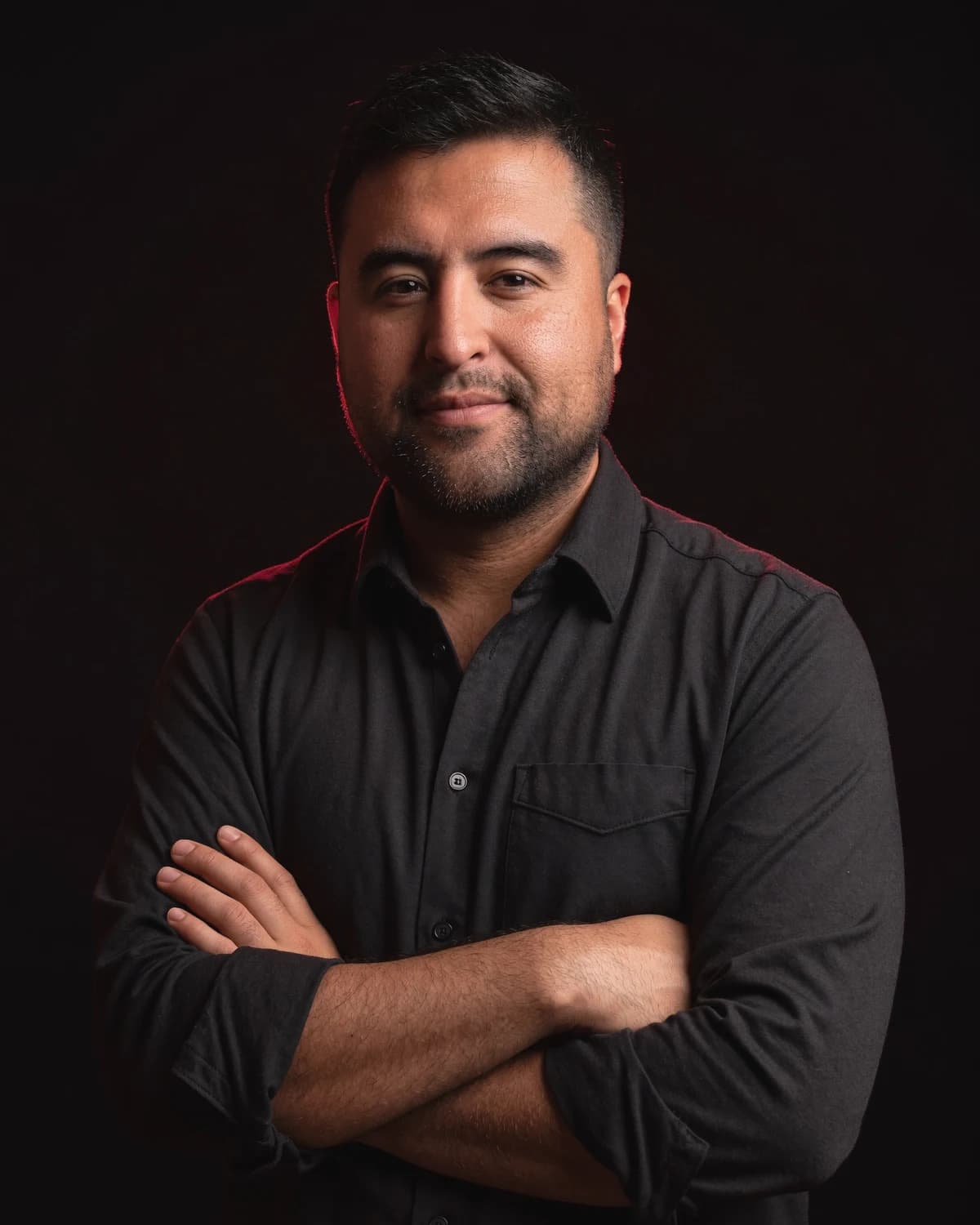
My name is Luis Metzger. I run Metzger Creative from Golden, Colorado and Chattanooga, Tennessee. I do the work myself, and when a build needs more than one pair of hands I bring in senior engineers I have worked with and vouch for. What you never get is an account manager standing between you and the person writing the code.
What I actually do
I build it, I run it, and I answer for it.
I build and run production software: web applications, mobile applications, and the infrastructure underneath them. On the web that is TypeScript, React and Next.js, with Postgres for data and AWS for everything around it.
On mobile I build natively by default, in each platform’s own language and tooling, so an app behaves the way its platform expects and meets the store that reviews it on that store’s terms. React Native is the deliberate alternative rather than the default, and it is the right call when one shared codebase genuinely serves the product better.
I also do the half that never makes it onto a homepage: migrations, CI, monitoring, access control, and the maintenance that decides whether a system still works in a year. If you have been burned by a build that was fine on launch day and untouchable six months later, that gap is usually where it happened.
The visual half of the catalog is newer: brand motion and photoreal renderings, made with the same discipline as the code and labeled for exactly what they are. Delivered pieces are on both pages.
This site is a working sample of that. I designed it, built the token system, wrote the tests that keep it honest, and deployed it.
A CV tells you where somebody sat. It does not tell you whether they will make a good architectural call on your product, and the two come apart more often than hiring suggests. Read the code, push on the reasoning, and ask me the hardest question you have. You can run that test in twenty minutes.
- TypeScript
- Go
- React
- Next.js
- Ruby on Rails
- React Native
- iOS
- Android
- PostgreSQL
- Amazon Web Services
Product names and logos above are trademarks of their respective owners. Their use here identifies the tools I build with and does not imply any affiliation or endorsement. The Android robot is reproduced from work created and shared by Google and used according to terms described in the CC-BY-3.0 license.
The work I keep
The telling number is who stays.
A large share of my time goes to one client I have worked with for years. That is the number I would look at if I were the one buying. Handing over a launch is the easy half. Being kept on afterward, by somebody free to replace you at any point, is the part that is hard to arrange and harder to fake.
Client names appear on this site when I have written permission to put them there, and not before. That rule protects the next client as much as the current one. On a call I will tell you about the work in specifics, including the parts that went badly.
Where I work from
Two cities, both home.
Golden and Chattanooga are both home, and I am invested in the technology communities in both. The work itself stays remote for most engagements, but the meetings that decide things are different: kickoffs, architecture sessions where a whiteboard beats a call, the conversation before you sign something large. For those I get on a plane.
1,138 mi apart on the great circle
Golden, Colorado
Clear Creek runs through the middle of town, the Front Range starts at the end of the street, and Denver is twenty minutes east.
Colorado has a deep bench of product and platform engineers and the meetups to match. This is where the practice keeps its edge sharp.
- Lookout Mountain
- 7,359 ft / 1.7 mi
- Golden
- 5,662 ft / 3.6 mi
- North Table Mountain
- 6,522 ft / 6.2 mi
- Relief
- 1,889 ft
Section SW to NE / 8.46 mi / 100 samples / datum 5,602 ft / vertical exaggeration 7.4x / USGS 3DEP 10 m
Chattanooga, Tennessee
The Tennessee River wraps the city at Moccasin Bend, Lookout Mountain stands over it, and the fiber in the ground is municipal.
Chattanooga has an underrated startup scene and a shortage of senior engineering help I would rather close than complain about.
- River
- 8.94 mi
- Ground
- 2.91 mi
- Sinuosity
- 3.07
- Bend neck
- 0.94 mi
Point Park, Lookout Mountain
207 deg / 3.65 mi / 1,659 ft
Plan / north up / scale bar 1 mi / 47 vertices / OpenStreetMap channel trace within 37 ft
How an engagement runs
The same four steps, every time.
You know what you are agreeing to before you agree to it.
Twenty minutes on a call
You describe what is broken or what you want built, and I tell you whether I am the right person for it.
A written scope, then a fixed fee
What is included and what would push the number up, before you sign rather than at invoice time.
The work, in the open
A written update every week, and code in your repository under your accounts from the first commit.
Handover you could actually use
Documented architecture, credentials in your name, and a continuity plan another engineer could pick up.
The process page walks each of those four at length, including what I need from you at every stage and what happens when a date stops looking achievable.
If committing to a full build on the strength of a website feels like a lot, buy the smallest thing first. The audit is $5K–$12K, and the fee comes off the first build engagement that follows.
The one-person question
And if I get hit by a bus?
It is the first thing anybody sensible asks, and it deserves a real answer rather than a flinch. Three things, all of them written into the contract instead of promised on a page.
A continuity plan in every SOW
Every statement of work names who to call, what they get access to, and what it costs to bring them up to speed. It is a clause you can read, not a reassurance you have to take on faith.
Architecture documented as it is built
Written while the decision is still fresh, not reconstructed later by whoever inherits it. A system nobody can explain is a system nobody can take over, and that is the real risk hiding behind the question.
Senior engineers I already work with
A vetted bench of people I have built alongside and would put in front of you myself. They are how a build scales past one pair of hands, and they are why an engagement does not stop if I am unavailable: somebody who already knows the shape of the work picks it up.
Sitting inside a team you already have
I also work inside teams that already exist. If you have engineers and need another senior one in the standup, reviewing pull requests and carrying tickets alongside them, that is a normal engagement here and usually a better idea than running a second project next to the team you already pay for.
Talking to me
There is no queue and no gatekeeper.
The person who answers your first email is the person who writes the code. I keep the number of concurrent engagements deliberately low, so your project is never waiting behind four others for attention it was promised.
If you are not technical, none of this needs to be intimidating. I will explain the tradeoff in plain words, tell you what it costs, and tell you what I would do if the money were mine. If I use a term that means nothing to you, stop me and ask. Nobody here is keeping score.
The direct address is luis.metzger@metzgercreative.com, and it reaches me rather than a shared inbox. I reply within one business day. If that ever stops being true, this sentence comes off the page before the promise does.
The pleasing part, while you are deciding: both cities have a Lookout Mountain. Golden's tops out at a published 7,377 feet, with Buffalo Bill buried on top of it, and the terrain profile further up this page reads 7,359 because that is where the transect crosses the ridge rather than the summit. Chattanooga's runs to 2,389 feet and stands over the Tennessee River. I did not plan that and it does not mean anything, but it does make the two ends of this easy to remember.